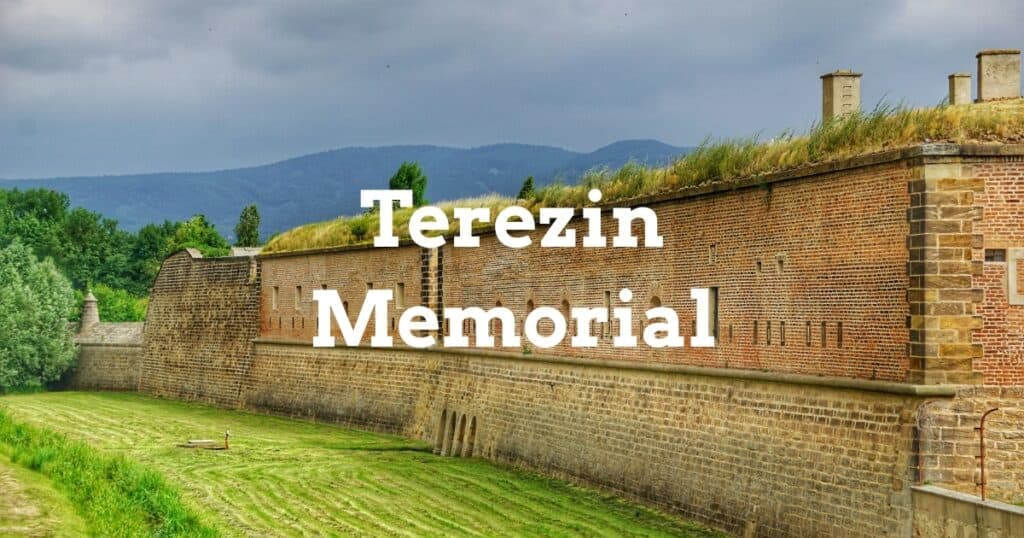
Do you want to gain a truly comprehensive understanding of Czech history, even if it won’t exactly be a pleasant experience? Then take a day trip to the Terezín Memorial. During World War II, this site served as a Jewish ghetto and a transit camp where Czech Jews were rounded up.
In this article, you’ll learn everything you might want to know before visiting the Terezín Memorial, as well as plenty of interesting facts about the site itself.
What Is Terezín Memorial?
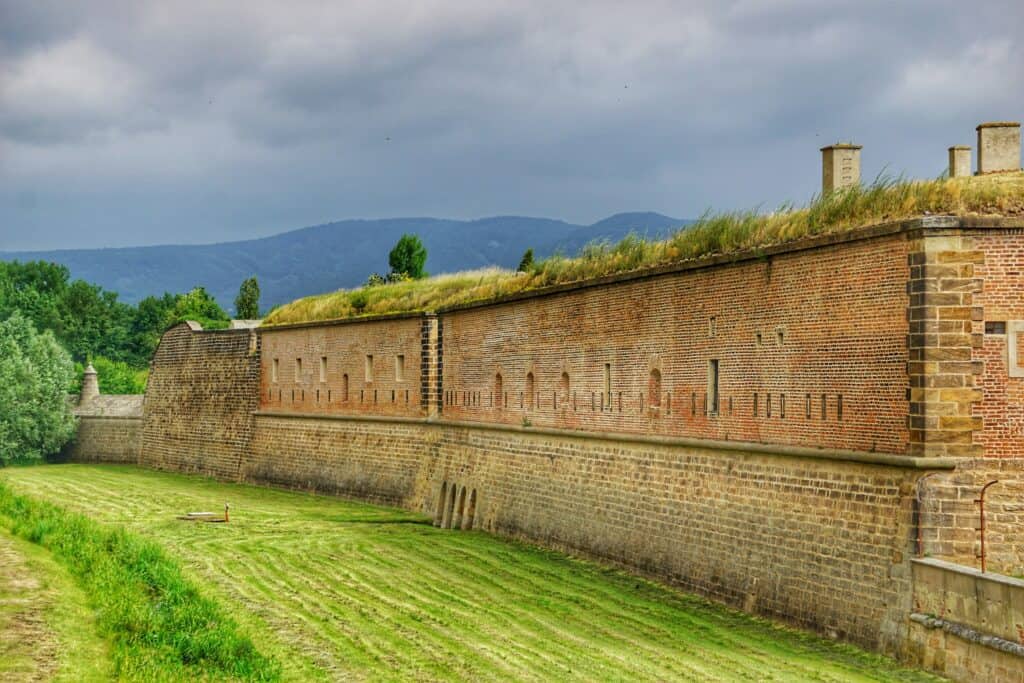
Terezín is a small town north of Prague, originally built as a military fortress in the late 18th century. During World War II, two different but connected Nazi persecution sites operated here: the Jewish ghetto in the Main Fortress and the Gestapo prison in the Small Fortress.
This is why visitors sometimes use different names for the same trip: Terezín Memorial, Terezin Concentration Camp, Theresienstadt, Terezín Ghetto, or the Small Fortress. Strictly speaking, Terezín was not one single camp with one entrance. It was a whole town and fortress system used for imprisonment.
The official Terezín Memorial today includes several places across the town, that you can visit. You do not need to see every single place to have a meaningful visit, but it helps to understand that the memorial is spread out.
MY LOCAL ADVICE: do not arrive expecting one compact museum building. Terezín is walkable, but the main sites are in different parts of town, and the visit can feel fragmented if you do not plan the route in advance.
A Short History of Terezín Memorial
Terezín was founded as a fortress town. For a long time, it had a military function. The Small Fortress also served as a prison before World War II; one of its best-known prisoners was Gavrilo Princip, whose assassination of Archduke Franz Ferdinand helped trigger World War I.
After the Nazi occupation of Czechoslovakia, the Small Fortress became a Prague Gestapo prison in 1940. Political prisoners, resistance members, people accused of helping others, and many prisoners from different occupied countries were held there in terrible conditions.
In 1941, the town of Terezín itself was transformed into a Jewish ghetto. More than 140,000 Jewish prisoners passed through the ghetto during less than four years. Around 35,000 people died in Terezín because of hunger, disease, and inhuman living conditions. Many others were deported from Terezín to concentration camps and did not survive.
Terezín was also used by the Nazis for propaganda. They tried to present it as a “model ghetto” to hide the reality of deportations and mass murder. This contrast between staged propaganda and real suffering is one of the most disturbing parts of the history here.
What to See at Terezín Memorial
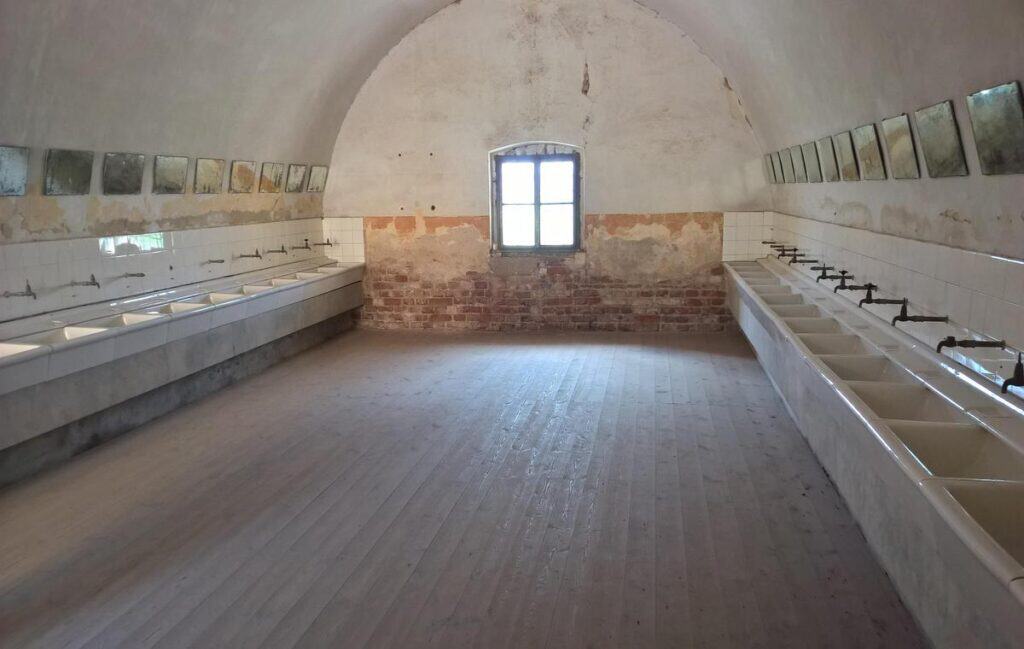
There are several places connected with the memorial, and it is easy to underestimate how much there is to see. For most first-time visitors, I would focus on the Small Fortress, Ghetto Museum, Magdeburg Barracks, and the Jewish Cemetery with crematorium. If you have more time and energy, add the prayer room, replica of the mansard room, columbarium, and other smaller sites.
Small Fortress
The Small Fortress is the most visited part of Terezín Memorial. It was used as a Gestapo prison from 1940 to 1945, and the sightseeing route leads through former prison courtyards, cells, service rooms, the execution site, and a long fortress corridor.
This is probably the place that most visitors imagine when they search for “Terezin Concentration Camp”. It is visually powerful and emotionally heavy. The entrance gate, prison cells, and courtyards make the history very direct. You can visit independently, but a guided tour can help you understand what you are looking at, especially if you are not familiar with Czech wartime history.
Ghetto Museum
The Ghetto Museum is located in the former town school. During World War II, this building housed a home for Jewish boys. The exhibition explains the history of the Terezín ghetto, deportations, daily life, children in the ghetto, and the broader context of the Holocaust.
Magdeburg Barracks
Magdeburg Barracks were one of the important buildings of the ghetto administration and now contain exhibitions about culture, art, music, theatre, and everyday life in the ghetto. This part of the visit shows a different layer of Terezín: not only suffering, but also the effort of prisoners to preserve dignity, creativity, and community in impossible conditions.
Jewish Cemetery and Crematorium
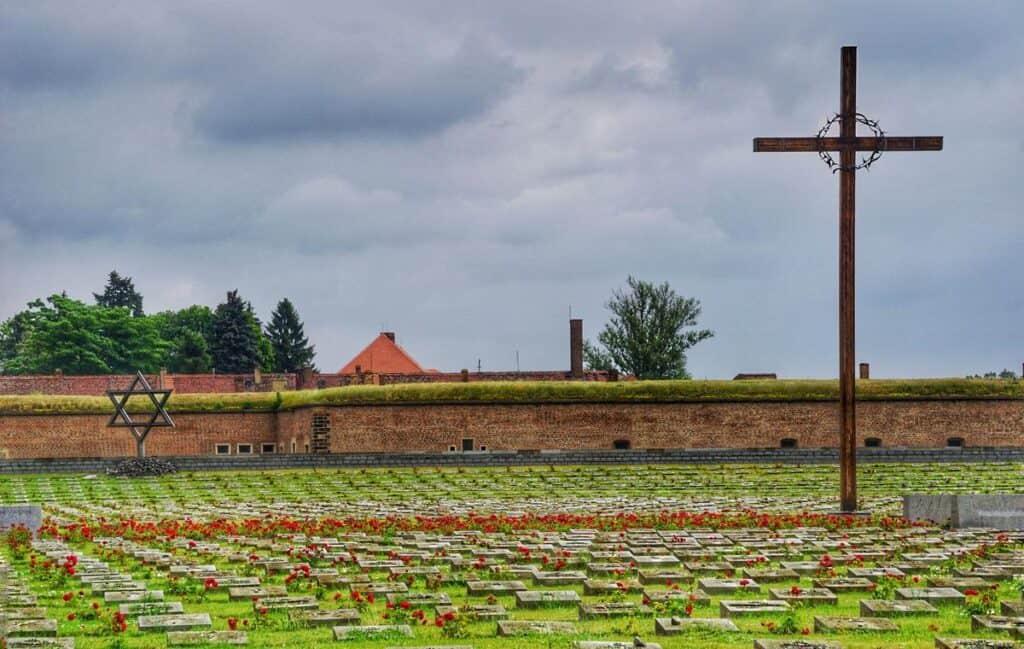
The Jewish Cemetery and crematorium are among the most important places in Terezín. The crematorium was connected with the deaths of thousands of ghetto prisoners. This is a place for a slower, quieter visit, not a quick photo stop.
Prayer Room and Replica of a Mansard Room
The prayer room from the time of the ghetto and the replica of a mansard room show another side of daily life in Terezín. The mansard room gives a small idea of the cramped conditions in which people lived. These smaller sites are easy to miss, but they make the story more personal.
MY TIP: If you have only about three hours, do the Small Fortress and the Ghetto Museum first. If you have four to five hours, add Magdeburg Barracks and the Jewish Cemetery with crematorium. Terezín is not a place where more sights automatically mean a better visit. Give yourself time to absorb what you see.
Terezín Memorial Tickets and Opening Hours in 2026
You can walk around Terezín for free, but you’ll need a ticket to visit the individual buildings.
You can purchase a combined ticket that includes the Small Fortress and all the other sites described above. An adult ticket costs 310 CZK, discounted tickets are also available. The ticket is valid for 4 days, but each object can be visited only once.
All sites are open from 9 a.m. to 5 p.m. (During the winter, the Small Fortress has reduced hours.) You can find the current opening hours on the official website.
How to Get from Prague to Terezín
Terezín is about 60 kilometers north of Prague, close to Litoměřice. The easiest ways to get there are by bus or organized trip. There is no convenient direct train to the memorial itself.
Prague to Terezín by Bus
From the Praha-Letňany bus stop, bus line 413 runs several times a day directly to Terezín; the trip takes about an hour.
If this is your first time using Czech public transport, my Prague public transport guide may help before you plan the trip.
Prague to Terezín by Train
Although there are no trains that go directly to Terezín, there are direct trains (Line R20) from Prague’s Main Station to the town of Bohušovice nad Ohří, from where it is 2.5 km to Terezín along a hiking trail.
Organized Tour from Prague
An organized tour makes sense if you want an easier day and more historical explanation. Check out this organized trip from Prague—it’ll save you the hassle.
Where to Stay When Visiting Terezín Memorial
For most travelers, I do not recommend staying overnight in Terezín. It is very easy to visit as a day trip from Prague, and Prague gives you much more choice of restaurants, hotels, and evening activities.
If you want to sleep closer to Terezín, I would rather look at Litoměřice. It is a lovely historic town nearby and feels more pleasant for an overnight stay. If you’re looking for comfortable accommodations, I’d recommend Penzion Dubina.
Practical Tips Before Visiting Terezín Memorial
Wear comfortable shoes because you will walk between different sites, sometimes on uneven surfaces. Bring water and a small snack, especially if you travel by public transport. Check the weather too, because part of the visit is outside.
Photography is possible in some places, but always behave respectfully. This is not a place for smiling selfies or loud conversations. Many visitors come because their family history is connected with the Holocaust, and the atmosphere should reflect that.
FAQ About Terezín Memorial
Is Terezín Memorial worth visiting?
Yes, if you are interested in Czech history, World War II, or Jewish history. It is a difficult place, but an important one. I would not visit it as a casual stop between pretty attractions, but as a meaningful day trip from Prague.
How far is Terezín Memorial from Prague?
Terezín is about 60 kilometers north of Prague. By car, the journey usually takes around 45 minutes. By public transport, allow more time because you need to check current bus connections and walk between memorial sites.
Can you visit Terezín Memorial without a guide?
Yes, you can visit independently. However, a guide can be very helpful because Terezín is historically complex. If you go without a guide, visit at least the Small Fortress and Ghetto Museum and read the exhibitions carefully.
What is the difference between Terezín and Theresienstadt?
Terezín is the Czech name of the town. Theresienstadt is the German name, often used in historical sources about the ghetto and Nazi propaganda. In travel articles, you will see both names.
How much time should I spend at Terezín Memorial?
Plan at least 3 hours for a basic visit and 4 to 5 hours for a more complete visit. If you travel from Prague by public transport, reserve most of the day.
Do I need to buy tickets in advance?
For an independent visit, tickets are usually bought at the Small Fortress or Ghetto Museum ticket office. For organized tours from Prague, it is better to book in advance, especially in the main travel season.
Is Terezín the same as a concentration camp?
People often search for “Terezin Concentration Camp”, but the history is more specific. The Small Fortress was a Gestapo prison, and the town of Terezín was used as a Jewish ghetto and transit camp. Both are part of the Terezín Memorial today.
Can I combine Terezín with another place in one day?
Yes, Litoměřice is the easiest nearby option, especially by car. But I would not combine Terezín with too much sightseeing. The visit is emotionally demanding, and it is better not to rush it.
Is Terezín Memorial Suitable for Children?
This depends a lot on the age and sensitivity of the child. Terezín is not an entertainment attraction and some parts of the visit are emotionally heavy. Older children and teenagers who already know something about World War II may learn a lot here, but they should be prepared before the visit.
For younger children, I would be careful. The Small Fortress, prison cells, cemetery, crematorium, and stories of children in the ghetto can be difficult to process. If you visit as a family, keep the itinerary shorter, take breaks, and do not force children to see every exhibition.